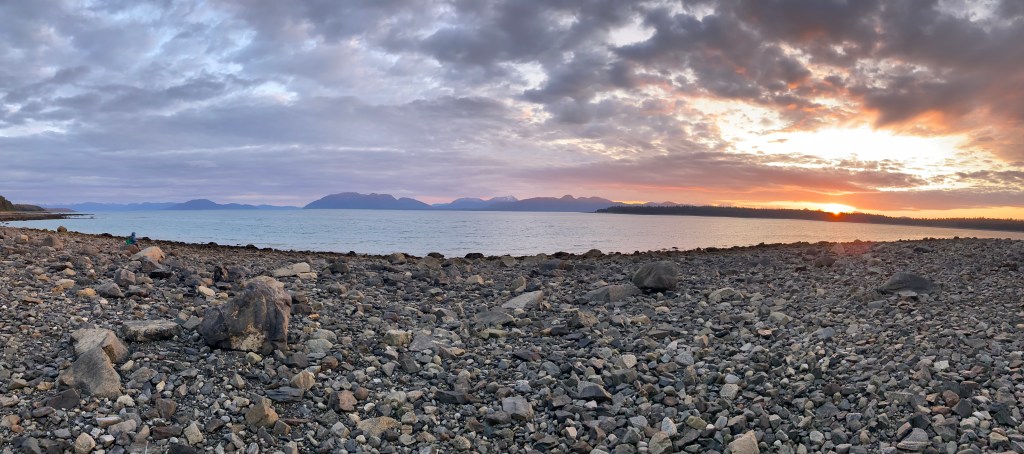
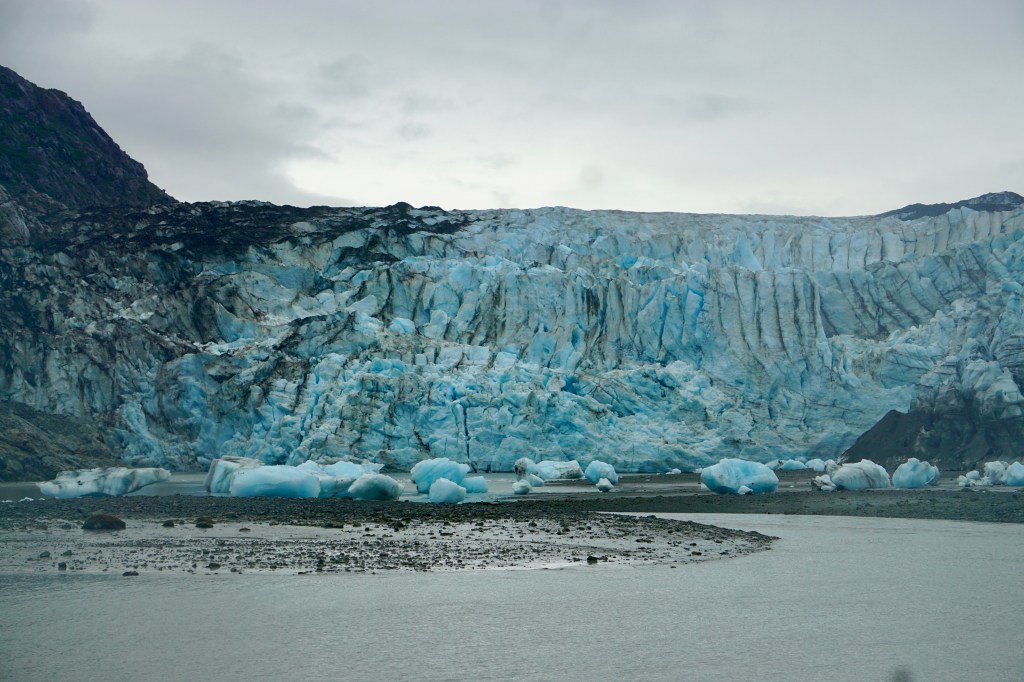
Our recent two-day trip to Glacier Bay National Park was pretty much unforgettable. Nestled in the remote wilderness of Alaska, Glacier Bay offers an untouched landscape that’s as raw and awe-inspiring as it gets. Here’s a glimpse into our journey through this incredible part of the world.
Day 1: Arrival
Glacier Bay is not the easiest place to get to, but not the most difficult Alaska national park to access either. We took Alaska Airlines, flying from Anchorage with a layover in Juneau and then finally flying into Gustavus, Alaska. Gustavus is a tiny airport, with a small runway and a small building that only houses the flight check in for Alaska Airlines.
After a scenic flight into Gustavus, Alaska, we were met by a staff member from Glacier Bay Lodge. The lodge offers a free transfer between the airport and lodge, about a 20 minute drive on a school bus. After arriving to the lodge you are met by another staff member, assigned your room key, and given a brief overview of the lodge and immediate area. We stayed in a deluxe room because it offered a serene waterfront view, setting the tone for a tranquil yet thrilling stay. Waking up to the calm waters and mountain views set a good tone for our amazing visit.
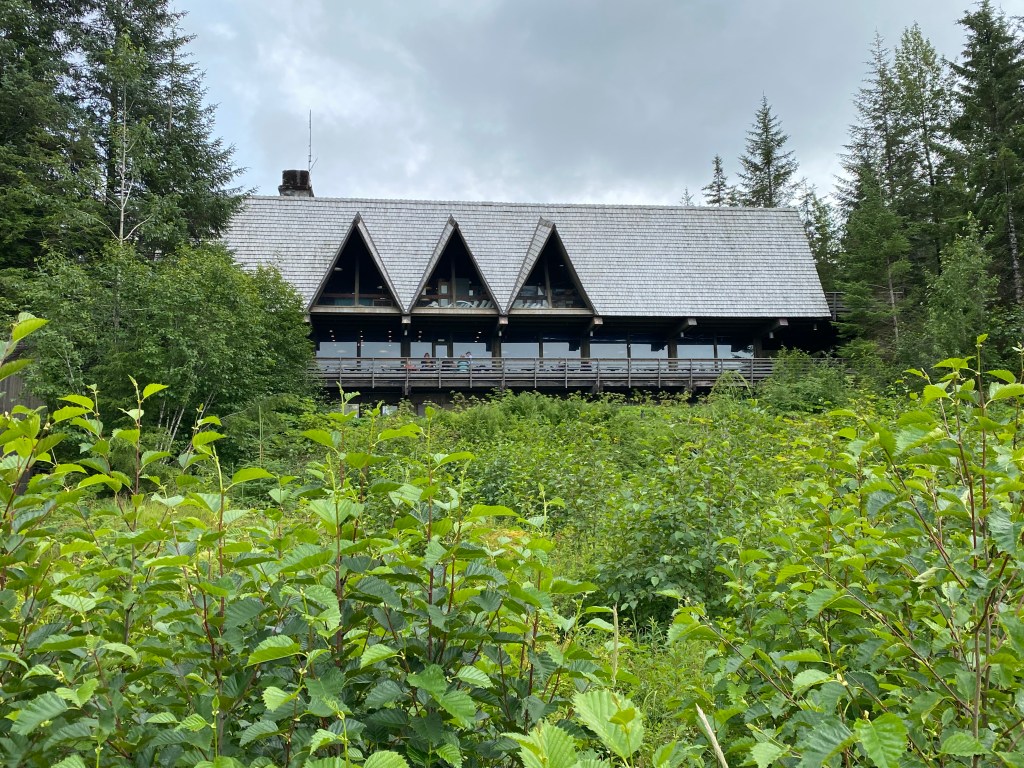
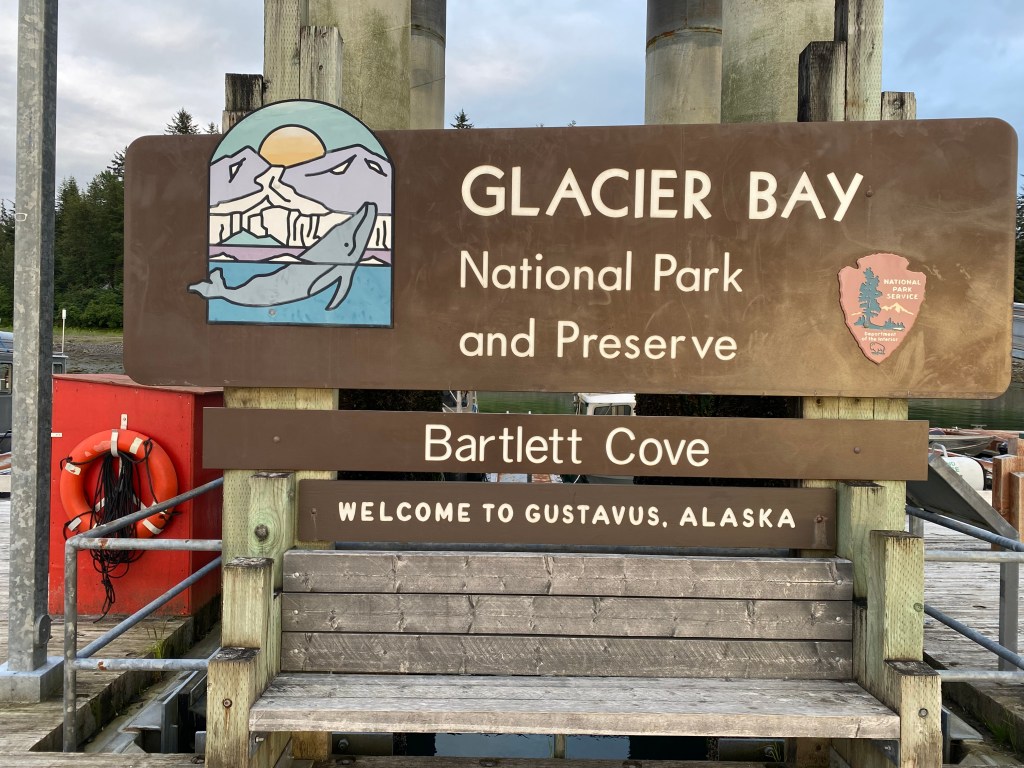
The main lodge offers a full-service restaurant, indoor and outdoor seating areas, a gift shop, and the National Park Service Visitor Center. The main lodge also offers wifi access. The lodge and rooms are set among the trees, but they provide easy access to Bartlett Cove and the National Park dock.
Day 2: Exploring by Sea
The highlight of day two was the full-day cruise, offered by the lodge and led by a knowledgeable park ranger. With every mile, we were more captivated by the beauty of Glacier Bay. From the deck, we spotted coastal brown bears meandering along the shoreline, sea otters and puffins floating with playful ease, and humpback whales feeding and breaching. We also watched seals and sea lions lounging on rocky outcrops and numerous sea birds. The Park Ranger narrates the day, pointing out glaciers, wildlife, and geological features.
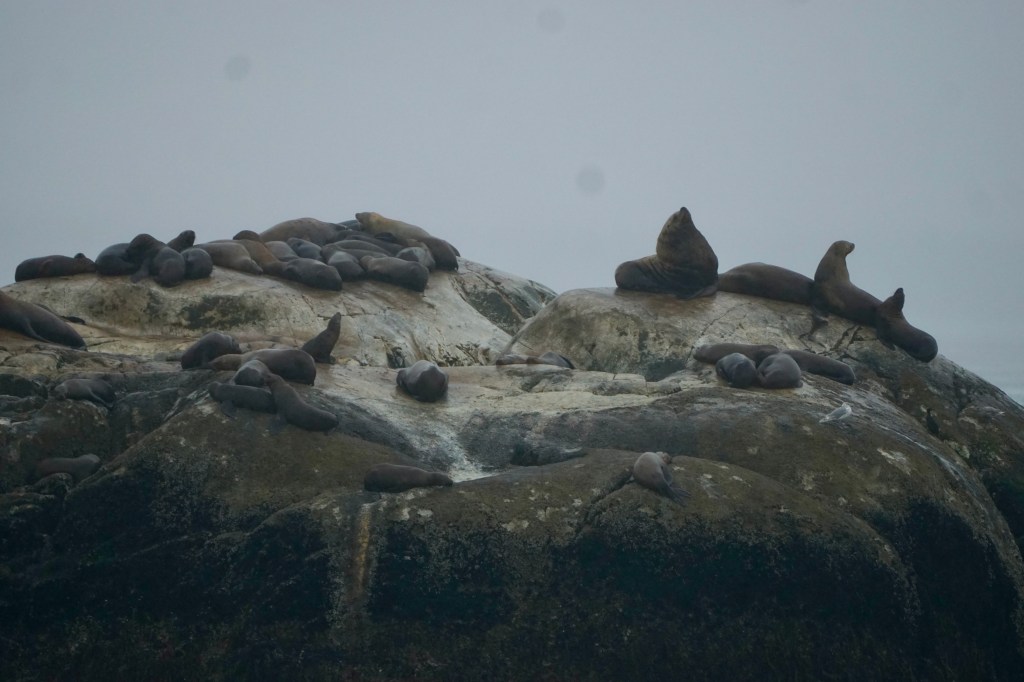
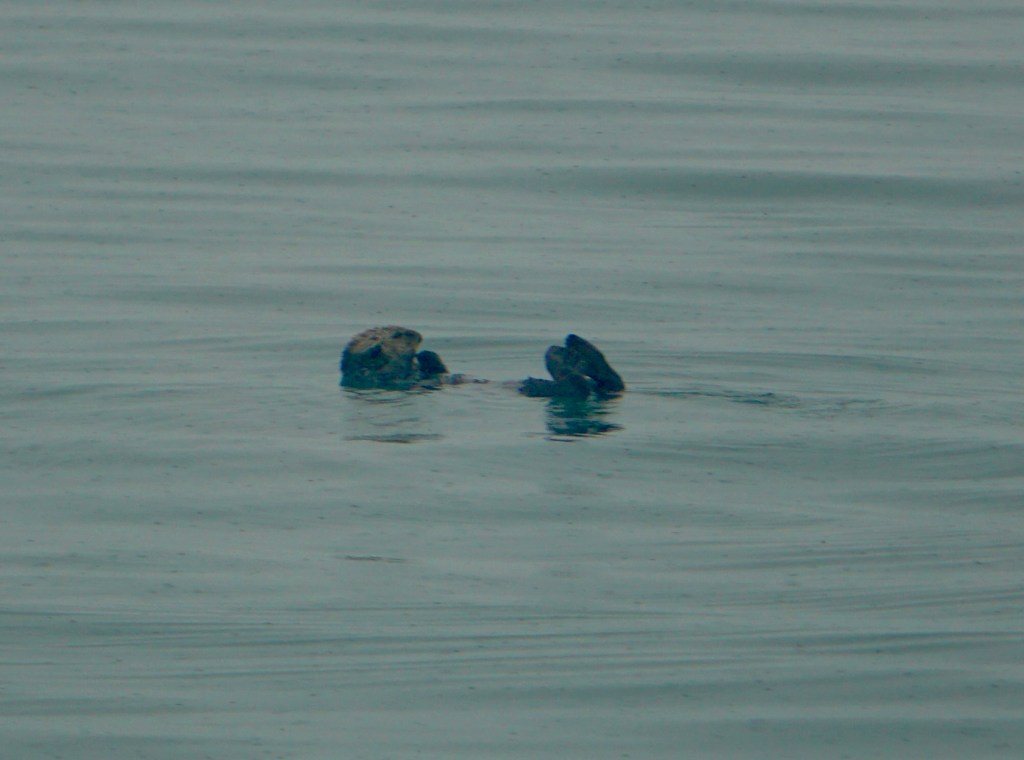
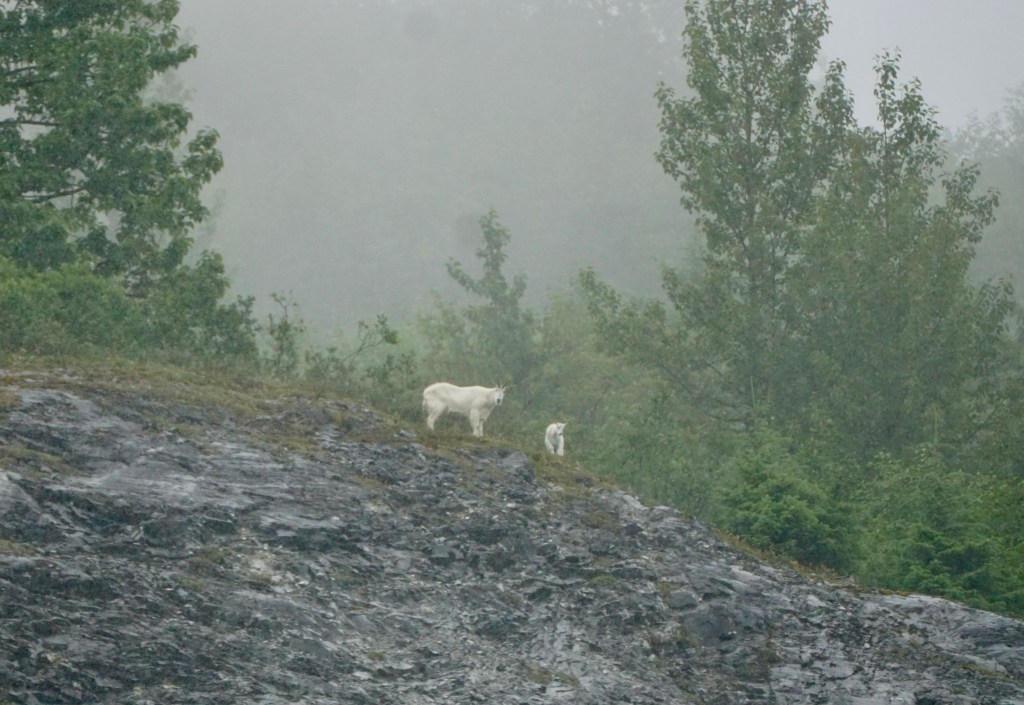
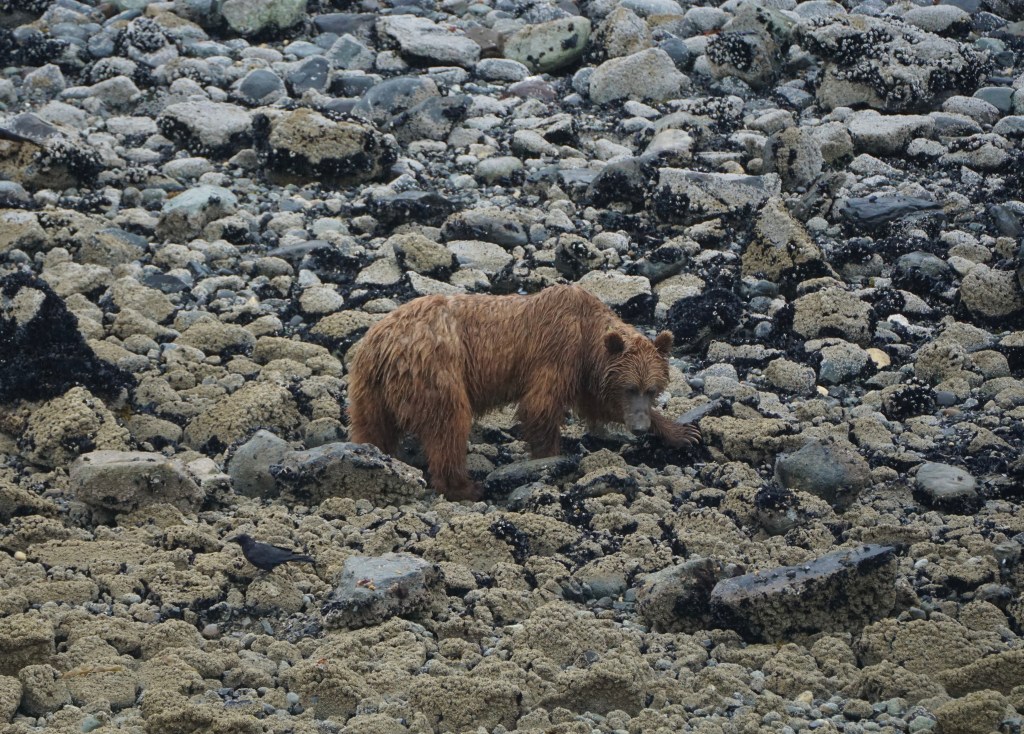
The crown jewel of the cruise was Johns Hopkins Glacier. We were lucky enough to witness it calving—a massive slab of ice breaking off and crashing into the water below. The thunderous sound and shimmering splash left us speechless, a humbling reminder of nature’s power. The benefit of the lodge’s cruise is that you are able to get closer to the glaciers and shore than visitors who are on larger cruise ships.

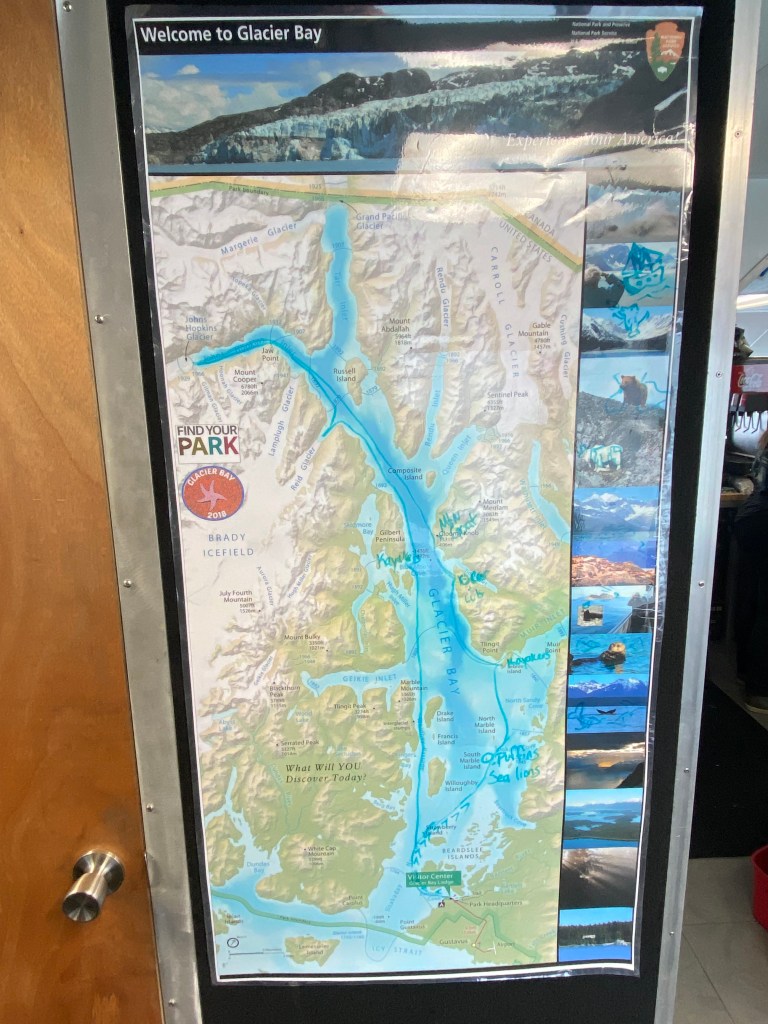
The day cruise is on a large catamaran. Visitors board on the dock right outside the main lodge at 7:00 am and return by 3:00 pm. Tickets are about $270 and include your fare and lunch. We found the cruise to be worth the money. The map image to the side shows the route we took. The catamaran has three decks, two are indoors and the top deck is open air. We took the boat tour on a rainy, foggy day, but we were still able to see amazing scenery and active wildlife. The captain and ranger do a nice job getting visitors to see as much as possible.
Day 3: Hiking & Cultural Discovery
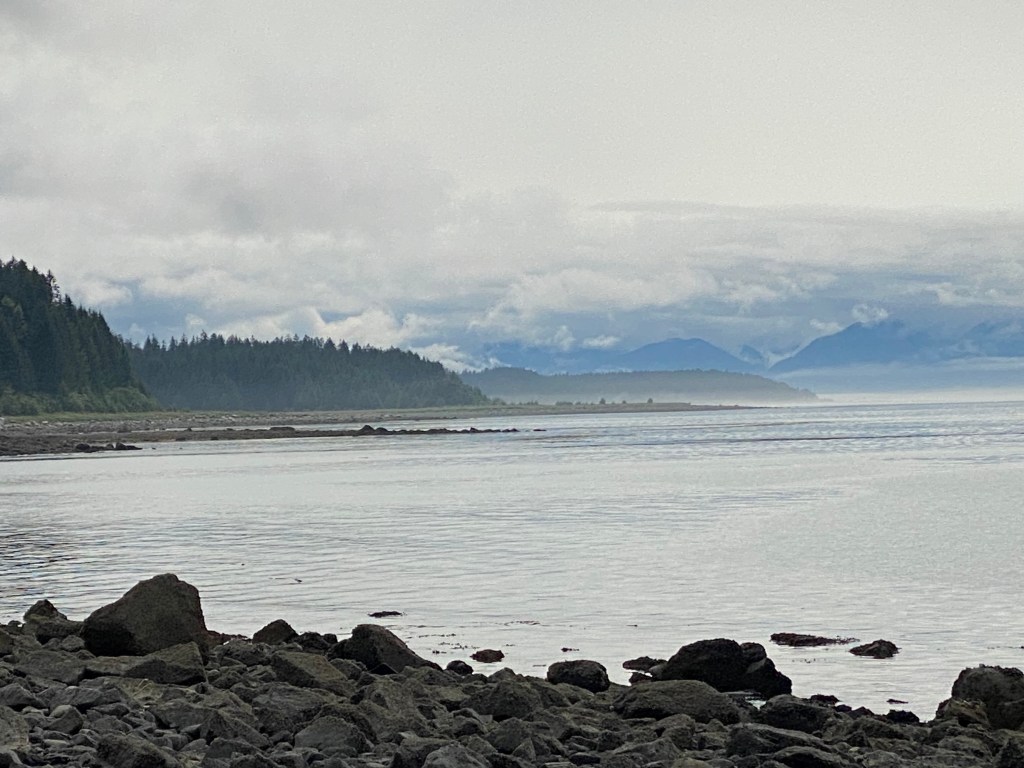
The second day was all about immersing ourselves on land. We set out on the Beach Trail, a path that winds along the coast and offers stunning views of the bay. The trail wanders through a forested area, past the Bartlett Cove Campground. As we walked, we spotted sea otters bobbing in the water, seemingly unbothered by our presence. Even more exciting, we caught sight of whales feeding just off the coast—a breathtaking sight against the rugged Alaskan landscape. We walked for 1.5 – 2 miles. You can go further, but the trail becomes less developed. We spent about two hours exploring the shore life and watching for sea life.
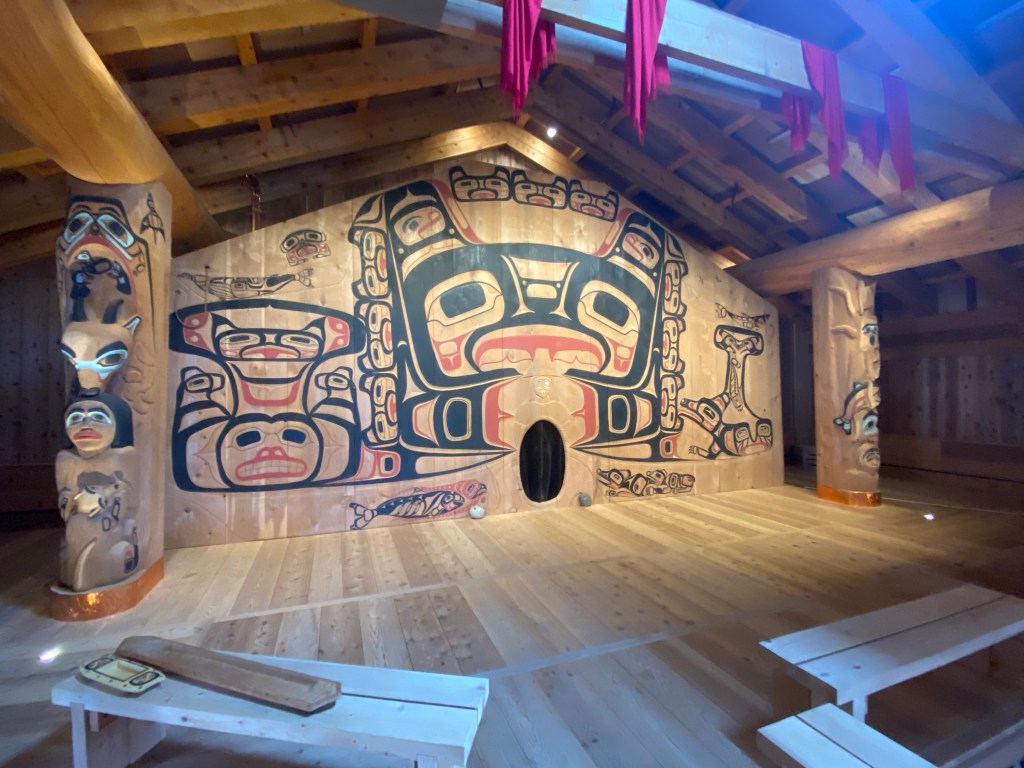
Our journey continued to the Huna Tribal House, where we learned about the rich heritage of the Huna Tlingit people, native to this land. Listening to stories, hearing about traditional practices, and understanding the connection between the tribe and Glacier Bay gave us a new appreciation for the area’s history and culture. The Huna Tribal House is also a short walk from the lodge and should be a part of any visit to Bartlett Cove.
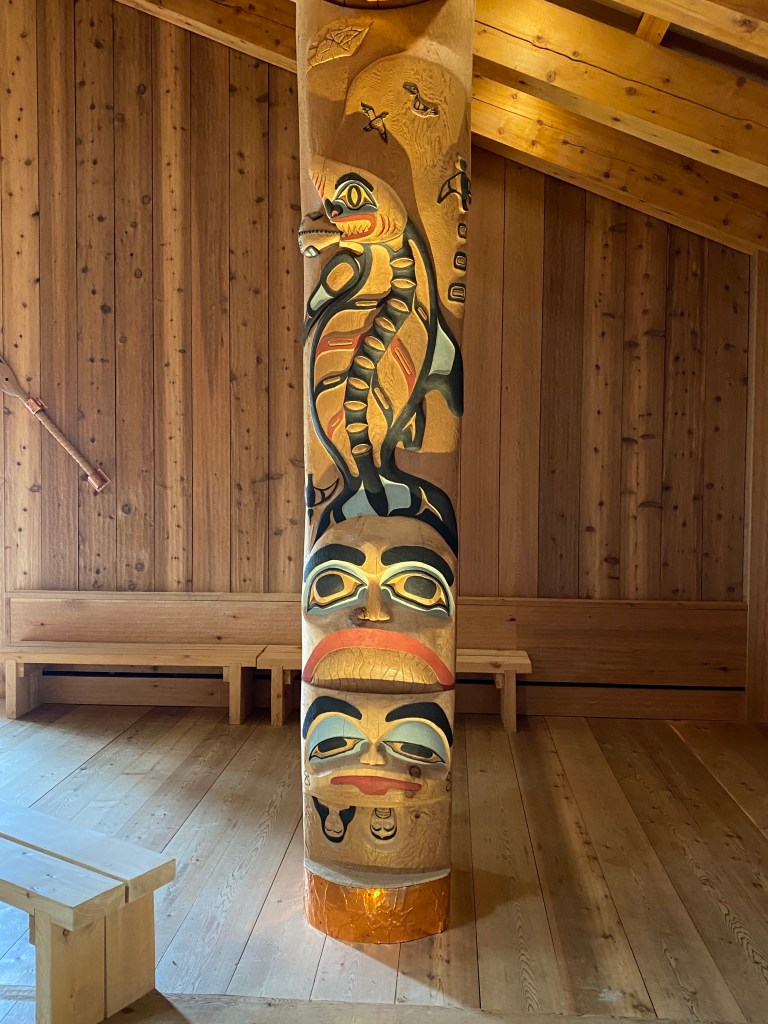
While the area around the lodge is not highly developed, there are plenty of things to do. The park service has set up an exhibit to showcase Snow, a humpback whale that frequented the area but was then killed by a cruise ship strike. The exhibit explained why this humpback was important to locals and how its skeleton was preserved. There are several interpretive signs around the lodge complex that tell the story of native culture, the diverse ecosystem, and the changing nature of the environment.

Reflections on an Unforgettable Experience
Our time in Glacier Bay National Park was filled with encounters with wildlife, serene landscapes, and a deep sense of place. For anyone seeking a blend of adventure, natural beauty, and cultural richness, a visit to Glacier Bay is an absolute must. We left with memories to last a lifetime, and we’re already dreaming of our return to this wild, wonderful corner of the world.
For more travel stories and tips, stay tuned to Wild Path Wanderings. Also, check out the Moon and Fodor’s Travel Alaska Guide Books that we used help plan our trip. Let Glacier Bay’s untamed beauty inspire your next adventure!
For this trip I used Osprey Stratos 34L Daypack. This pack was big enough to pack all of our needed supplies. It was also small enough to use as a carry-on. I have a smaller pack too, but found this was the perfect size to carry our camera, lens, binoculars, and some layers.
Bring a good rain coat. I love my Marmot Rain Jacket. I am also a big fan of layering up with Patagonia Capilene Midweight Base Layer and Smartwool Thermal Base Layer Hoodie.
(Some links may earn us commission.)



 WildPath Wanderings
Leave a comment